
Ahead of, and with additional thanks to the pandemic, digital technology has been thrust into the education stratosphere like never before. Teachers are picking up tools to bring into their learning environments with well-meaning intentions, but what is happening here? Well-meaning intentions aside, are students getting the absolute benefits from these tools?
Existing models of metacognition outline the potential for external variables to input into the process. However, it did not encompass the entirety of the metacognitive process; motivation, context, knowledge, skills and experiences. By merging the COPES (Winne, 1979) model with the MASRL model (Efklides, 2011), there is a framework with which we can see the importance digital tools play in the important metacognitive process. The MAC-SRL model incorporates the important functionality of conditions, operations and products with the intersections of motivation and context. These intersections are interchangeable and serve as a pathway to understanding how digital tools and educators, as external stimuli, can affect the metacognitive growth of students. Motivation has an implied affect on all steps of the metacognitive process, from engagement through re-direction and reflection and reiteration, and its absence in frameworks is noted. Correlating increased motivation with digital tools has been made by a plethora of researchers (Schunk, 2012). As such, educators must begin to experience vital tools that can support both their learning and pedagogy while also improving academic achievement.
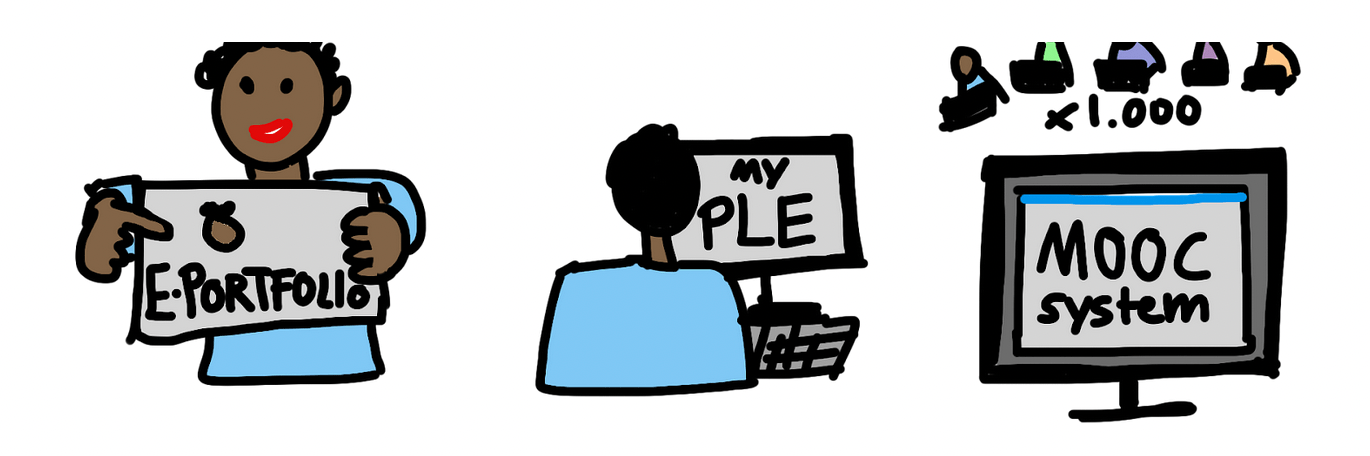
In Ontario, the public education system adopted a new early years curriculum, supported by D2L’s Brightspace portfolio to document learning. This portfolio highlights the rationale for understanding how best they can serve student learning. The e-portfolio gives student ownership, author rights and a bridge to build communication between home and school. The e-portfolio has substantial metacognitive learning opportunities and further develops cognitive functions within learning environments with variability to suit any need. With the future potential to incorporate Web 3.0 technologies, blockchain and chatbots, the implications of add-ons to the e-portfolio present many opportunities to interact with learners to support their metacognitive growth.
References
Efklides, A., (2011). Interactions of Metacognition With Motivation and Affect in Self-Regulated Learning: The MASRL Model. Educational Psychologist, 46(1), pp 6-25. https://doi.org/10.1080/00461520.2011.538645
Schunk, D. H. (2012). Learning Theories: An Educational Perspective (6th ed.). Upper Saddle River, NJ: Pearson.

